

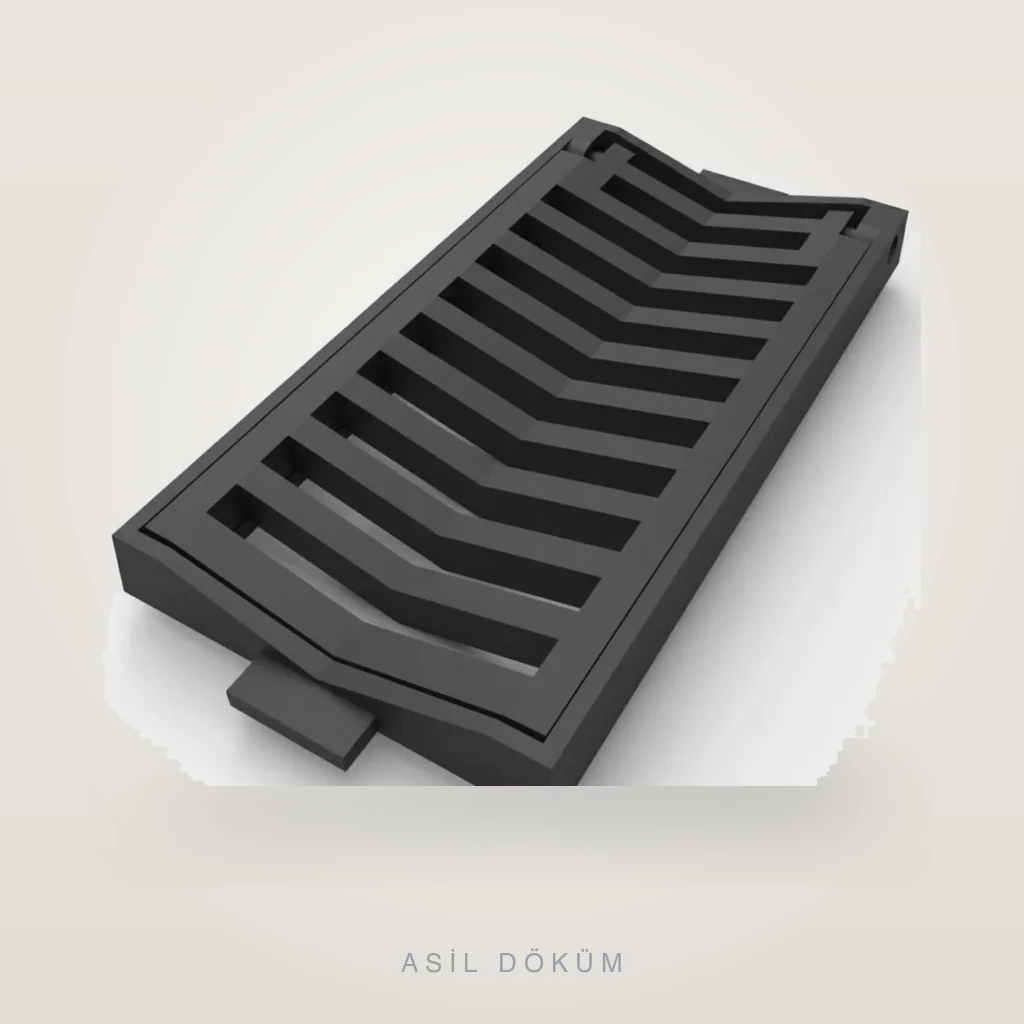
Short answer: To install a manhole cover, the frame is set flush with the road surface on a cleaned chamber opening measured to level; it is then bedded with C25/30 concrete or a rapid setting installation mortar, and the spot stays closed to traffic until the material gains strength. With rapid mortar this takes hours, with concrete days; the exact time is determined by the product label.
A large share of manhole cover complaints in the field stem not from product defects but from frame bedding mistakes. This guide walks through the installation step by step; for product selection, see the manhole cover selection guide and the EN 124 load classes guide.
Preparation: Cleaning the Chamber Opening and Measuring the Level
Old mortar, loose concrete, mud and water are completely removed from the chamber opening; a cracked adjustment ring or cone is repaired first. Then, using a straightedge or laser with the finished road surface as the reference, the level at which the frame will sit is established. The load class is verified before installation: kerbsides and road edge strips require at least C250 (250 kN), and every road open to traffic requires D400 (400 kN).
Setting the Frame
The frame is centred over the chamber opening and brought to the target level with steel shims. Two rules govern the job: the top of the frame must sit flush with the finished road surface and must follow the road gradient exactly. The level check is done with the cover seated in the frame, since the surface vehicle tyres touch is the top of the cover. On deep chambers a raising ring is used.
Choosing Mortar and Concrete
Roads open to traffic require at least C25/30 grade concrete; low strength lean concrete crumbles under the frame in a short time. At busy locations that cannot stay closed for long, low shrinkage rapid setting mortars that allow reopening within hours are preferred. In winter, concrete cannot set properly under frost: frost rated formulations or winter admixtures are used and the poured area is covered; if the ground is frozen, installation is postponed where possible.
Concreting and Curing Time
The material is placed around and, critically, under the frame so that no voids remain, and is compacted with a rod; every void under the frame causes point stress and fracture under traffic load. The surface is kept moist during curing. Reopening time depends on the material: for rapid mortar the hour value on the label applies, for C25/30 concrete the strength gain period measured in days. No vehicle load is applied before the label time has passed; early loading is the most common and irreversible installation mistake.
Checking How the Cover Seats
The cover is placed and its seating is tested under load. A rattling noise signals a level or contact error between cover and frame; the cause is usually mortar residue on the seating surface, a frame set against the road gradient, or a cover and frame paired from different productions. A rattling cover takes an impact with every passing vehicle, fatigues and eventually cracks.
Step by Step Summary
| Step | Work done | Critical point |
|---|---|---|
| 1. Preparation | Cleaning the chamber opening, measuring the level | The reference is the finished road surface |
| 2. Setting | Adjusting to target level with shims | Flush seating that follows the gradient |
| 3. Bedding | C25/30 concrete or rapid setting mortar | No voids under the frame |
| 4. Curing and reopening | Moisture and frost protection, time tracking | Hours with rapid mortar, days with concrete |
| 5. Check | Seating and rattle test | Rattling signals a level error |
Common Installation Mistakes
- Leaving voids under the frame: The cover carries load at single points and the frame breaks.
- Opening to traffic too early: Mortar without strength is crushed, the level fails and the job must be redone.
- Replacing only the cover with another brand: Seating geometry is manufacturer specific; a mismatched cover rattles and breaks.
- Bedding on a dirty surface: The material does not bond; lost adhesion soon returns as cracks.
- Ignoring the road gradient: A frame left high on one side draws vehicle and snowplough blade impacts.
- Pouring on frozen ground: Material that cannot set falls apart under the first load.
Buying cover and frame as a matched set from the same manufacturer prevents most of these mistakes from the start. Manufacturers such as Asil Döküm, which produces both ductile iron (GGG50) and composite ranges under one roof, supply covers together with their frames; for material selection, see the cast iron vs composite comparison.
Maintenance
Sand and gravel collecting on the seating surface are cleaned off, hinge and locking mechanisms are checked, and a cover that starts rattling is inspected without delay. Joints opening between the asphalt and the frame must be sealed before they allow water ingress and frost damage.
Safety Note
Keep the open chamber fenced with barriers and warning signs throughout the work and never leave it unattended. Cast covers are heavy: use a lifting key, work in pairs when needed, and wear protective gloves and footwear. On roads open to traffic, a high visibility vest and proper traffic management are mandatory.
Frequently Asked Questions
When can the road be reopened to traffic after installing a manhole cover?
Allow hours with rapid setting mortars and days with C25/30 concrete; the exact time is determined by the product label, and no vehicle load is applied before it has passed.
Which concrete or mortar should be used under the frame?
Use at least C25/30 concrete on roads open to traffic; at locations that cannot stay closed for long, low shrinkage rapid setting mortars are preferred.
What should I do if the cover rattles?
Rattling signals a level or contact error. Clean the seating surface first; if the problem persists, check the frame level and gradient. If a cover and frame from different productions were paired, replace them as a matched set.
Can a manhole cover be installed in winter?
Yes, but standard concrete cannot set properly in frost. Frost rated mortar or winter admixtures must be used, the area must be covered for protection, and installation must be postponed if the ground is frozen.
Can I replace only the cover and keep the old frame?
Not recommended. Seating geometry is manufacturer specific; another brand of cover will not seat fully in the old frame and may rattle and break. Cover and frame must be replaced as a matched set.
[{"q":"When can the road be reopened to traffic after installing a manhole cover?","a":"Allow hours with rapid setting mortars and days with C25/30 concrete; the exact time is determined by the product label, and no vehicle load is applied before it has passed."},{"q":"Which concrete or mortar should be used under the frame?","a":"Use at least C25/30 concrete on roads open to traffic; at locations that cannot stay closed for long, low shrinkage rapid setting mortars are preferred."},{"q":"What should I do if the cover rattles?","a":"Rattling signals a level or contact error. Clean the seating surface first; if the problem persists, check the frame level and gradient. If a cover and frame from different productions were paired, replace them as a matched set."},{"q":"Can a manhole cover be installed in winter?","a":"Yes, but standard concrete cannot set properly in frost. Frost rated mortar or winter admixtures must be used, the area must be covered for protection, and installation must be postponed if the ground is frozen."},{"q":"Can I replace only the cover and keep the old frame?","a":"Not recommended. Seating geometry is manufacturer specific; another brand of cover will not seat fully in the old frame and may rattle and break. Cover and frame must be replaced as a matched set."}]