

Short answer: choose ductile cast iron for heavy, supervised traffic; choose composite where theft risk, electrical infrastructure or corrosive environments dominate. Both are produced to the same EN 124 load classes — the difference is material behaviour, not capacity. As one of the few Turkish manufacturers producing both, we wrote this comparison on engineering criteria alone.
The Two Materials
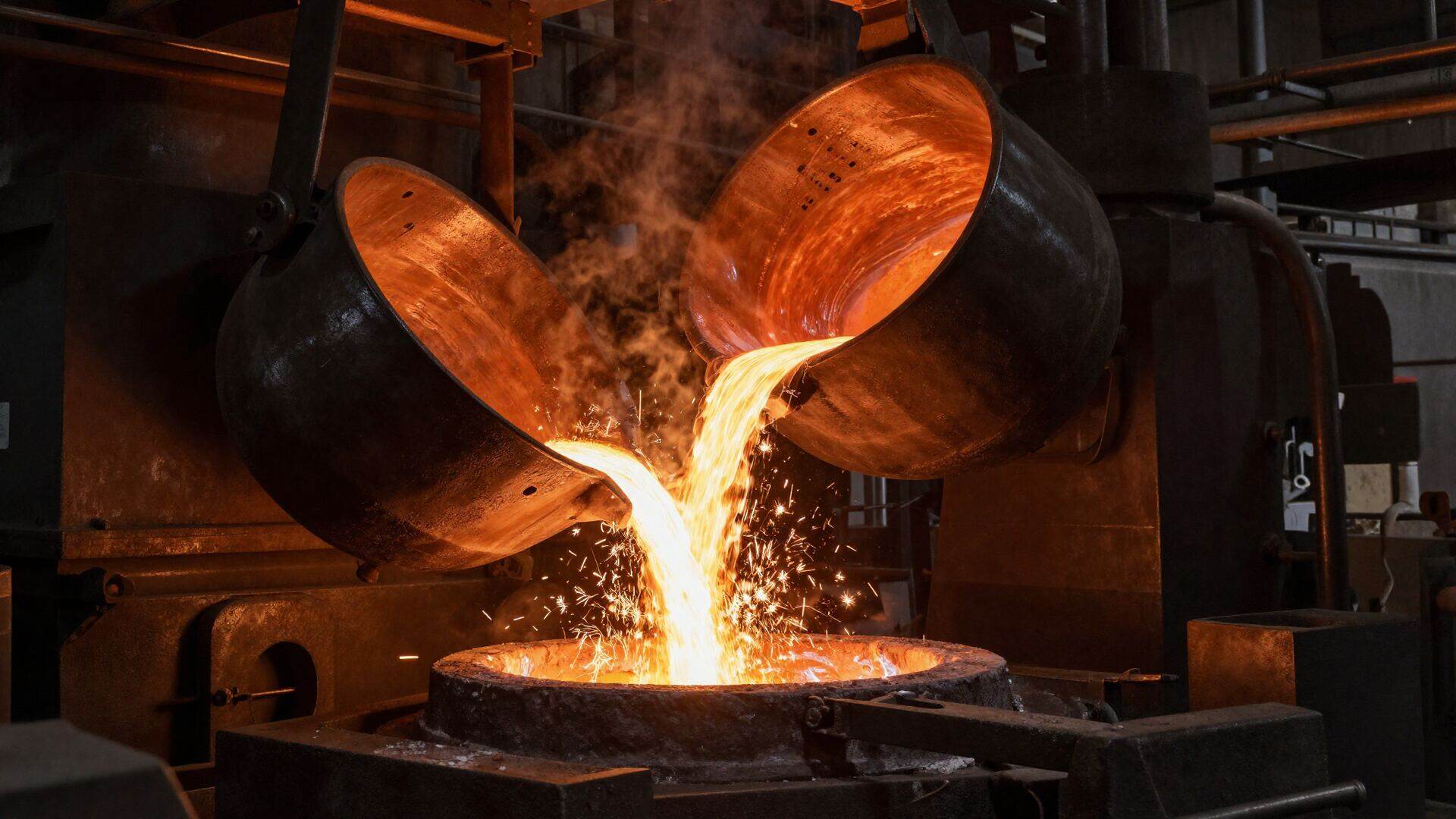
Ductile iron (GGG50) has been infrastructure's standard for over a century thanks to its tensile strength and ductility. Composite (glass-fibre reinforced polyester/SMC) is a press-moulded polymer material that spread over the last two decades.
Comparison Table
| Criterion | Ductile Iron | Composite |
|---|---|---|
| EN 124 classes | A15–F900 (all) | A15–D400 |
| Weight (Ø600 D400) | ~90–120 kg | ~30–45 kg |
| Scrap value / theft | Yes — a target | None — theft-proof |
| Corrosion | Paint-protected, can rust | Rust-free, seawater-resistant |
| Conductivity | Conductive | Insulating — an advantage in power networks |
| Thermal expansion | Low | Higher — frame tolerance matters |
| Service life | Very long (50+ yr record) | Good; shorter record under heavy traffic |
| Recycling | Infinitely remeltable | Limited |
| Price | Competitive at scale | Usually near or below cast iron |
Which One When?
Cast iron: heavy continuous traffic, E600/F900 sites, specs demanding long field history.
Composite: theft-prone routes (telecom, lighting), power distribution chambers, coastal or treatment-plant corrosion, frequently opened maintenance points.
Mixed use is common: cast on carriageway chambers, composite on footpaths. Request both alternatives in one quote; see our cast iron and composite ranges.
Sık Sorulan Sorular
Is a composite manhole cover really theft-proof?
Yes. Composite has no scrap value and cannot be melted for resale — the main reason municipalities switch.
Can composite covers carry vehicle loads?
Yes — EN 124-tested composite covers are classified up to D400 (40-tonne test load). For E600/F900, cast iron is the only option.
Which lasts longer?
In supervised settings cast iron leads with a 50+ year record. In corrosive or theft-prone locations composite's effective life is longer — cast covers are stolen before they rust.
How big is the price difference?
It varies by size and class; composite is often the more economical. Ask for a two-alternative quote.
Can I pair a cast frame with a composite cover?
Not recommended — thermal expansion differs. Keep cover and frame from the same material set and manufacturer.
[{"q": "Is a composite manhole cover really theft-proof?", "a": "Yes. Composite has no scrap value and cannot be melted for resale — the main reason municipalities switch."}, {"q": "Can composite covers carry vehicle loads?", "a": "Yes — EN 124-tested composite covers are classified up to D400 (40-tonne test load). For E600/F900, cast iron is the only option."}, {"q": "Which lasts longer?", "a": "In supervised settings cast iron leads with a 50+ year record. In corrosive or theft-prone locations composite's effective life is longer — cast covers are stolen before they rust."}, {"q": "How big is the price difference?", "a": "It varies by size and class; composite is often the more economical. Ask for a two-alternative quote."}, {"q": "Can I pair a cast frame with a composite cover?", "a": "Not recommended — thermal expansion differs. Keep cover and frame from the same material set and manufacturer."}]